WELCOME TO THE CONTROVERSY! "This nation cannot be overthrown by battle. It would never allow itself to be. America can only be overthrown by removing its reason for greatness, its exceptionalism and existence as a force for world influence for good and freedom. The driving purpose that led our brothers and sisters to shed their blood for a new country and which drove a people and a President to hold fast to the premise that the nation could not be divided into two in the bloody civil war. Our vision of defeating evil, which gives our men and women in the military valor and a willingness to sacrifice in each of our American centuries, has been freedom. The greatest force for freedom has always been the Constitution of the United States. Now, this government, of the people disregards the people. Now these rights, for the people, seem to have been invalidated by a force that has no constitutional right to do so." - Author Steven Clark Bradley
"THE MOST INTELLIGENT OF IDIOTS:The Memoirs Of Author STEVEN CLARK BRADLEY"
A 5 Star REVIEW~~ Geri's Book Reviews
"A PASSIONATE, EMOTIONAL, AND ENDEARING MEMOIR ON LIFE'S LESSONS!"
Most children develop a craving for reading at an early age, under the influence of parents and teachers. Many of their favorites are classics, Nancy Drew, or perhaps 'The Cat In The Hat.' But, Steven Clark Bradley preferred World Book Encyclopedias, peeking his interest in travel, and so his life began.
After exploring thirty-four countries on four continents, Steven based his work on actual events, weaving a tense and suspenseful treatise in fiction. The author of five dramatic thriller novels, bringing stories and issues to life, then the best Memoir I have ever read is born.
An Instructor of English and business, helping students in Translation and Linguistics, an ability to speak French and Turkish, an assistant to a prosecutor and he continues to move forward. Steven Clark Bradley is the true definition of the word Scholar, his life opened up many doors, and he walked through them. His luminous ideas and creativity will indeed leave eternal footprints in the sands of time. More important, Steven conveys that life has many roads to walk on, many succeed after failure in lessons learned. However, without Faith, we have nothing! If we cannot forgive, how can we possibly move on? Without love in your heart, how can your mind focus? To forgive others and be forgiven for wrong-doing, whether intentional or not is the Golden key to freedom, strength, and peace of mind.
In addition, family and friendship are priceless, precious, and sacred. The love Steven shared with his parents and siblings is a treasure that inspired him to be a better person. After living seventeen years abroad, restoring shattered relationships and learning what failure is, Steven Clark Bradley finds a new leap in faith. The author reminds us about respect for life itself, and that it's crucial that a great nation must care and show mercy to the less fortunate.
Today, is America really better than those we destroyed, is freedom really free, and will our great nation continue to stand tall and brave? I highly recommend this book to all those who enjoy an autobiography that's filled with inspiration, honesty, and is educational. This endearing Memoir, penned by a Master storyteller will inspire as much as it will make you laugh, and cry. A remarkable, passionate story that will leave an aftermath generation-after-generation, from one author who makes a difference in this world!
"There is nothing greater than writing & creating something from nothing. It's the closest thing to the divine! I have lived in many cultures and it has given me a love for the differences amongst us. I am a student of American culture and write about the changes in our society. Hope you read my books detailed in this blog."Visit my Website At: http://storiesthatreadyou.com/ Author Steven Clark Bradley
THE MOST INTELLIGENT OF IDIOTS:The Memoirs Of Author STEVEN CLARK BRADLEY
“The Two minute window is closing.” The operative reported perched high up inside a bombed out building in Ramallah, Palestine that had once been filled with families who had been forced to flee Israeli tanks, mortars and laser-guided bombs. With an uninhibited view, he looked out at the indescribable ruin and carnage that had already been inflicted on this people whose leaders had passed up every opening for peace.
“Copy that” the operative’s base contact affirmed.
There, with his precision fully automatic .50-cal. Barrett M82 ready to accelerate the conflict into a full-blown war, Colonel Fisher Harrison took in the complete and utter destruction of a society literally crumbling around his location. He looked to the left and saw the barricaded windows with camouflage material shrouding the soldiers posted there, ready and willing to fire at anything that moved.
Fisher raised his eyes and looked straight out ahead. His view was good enough to look into the Calandria refugee camp. It was a cauldron of vicious plots and miniature bomb making factories, which made ad hoc missiles and jackets designed to be used only once. He glanced downward and saw a mother with her scarf removed and wrapped around her three small terrified children’s eyes. Hoards of terrified city dwellers were crouched down, never glancing upward, and fleeing through the streets; trying to stumble on a loaf of bread and a few bottles of water during a lull in the barrage of attacks.
The world had condemned Israel for its attacks, but Fisher had determined it was justified and obliged, just like the validation screaming in his head for the killing of the evil terrorist he was about to blow away. Every street was strewn with blown up cars, dead bodies and silence, only cut short by the frequent short volley of gunfire in every direction.
Smoke rose high into the sulfur-ridden darkened sky. Throughout the capital city of the land of a people without a country, old men, young women with children in their arms and in their wombs hid and prayed to the god in whose name they were fighting. Fisher doubted they deserved a country. Then he realized that his job, his own people deserved scarcely more than these who had been constantly lobbing missiles and sending suicide bombers into the heart of Israel.
Inside the so-called governmental zone, every building belonging to the Palestinian Authority was flattened except Arafat’s own presidential headquarters, but Fisher knew that the only reason the structure was still there was because Israeli forces had allowed it to remain. Arafat had been allowed to live, but with stipulations. The former leader of the Palestinian Liberation Organization who had carried out and ordered the torture and murder of hundreds of thousands of people was now the only hope for peace and survival for this war-weary people.
Arafat only left his compound twice a day to greet his followers and to speak with the press, which Fisher knew was now and which was why he had placed his very steady eye peering through a chamber that would place a beam of light, invisible to others, but very clear to Fisher, in the center of the President of the Palestinian Authority’s forehead. As soon as the clock struck two o’clock; as soon as the clock signaled the last breath for an elected leader who Fisher Harrison regarded as a terrorist, it would be time to unlock, pull back on the trigger and then get the hell away.
Fisher glanced constantly at his watch and thought about the SPU superintendent’s words before boarding the El Al flight to Tel Aviv in Chicago. He had travelled as a civilian and when he arrived at O’Hare Field, he was not allowed to board the flight until the next day. He knew that wasn’t a problem and that the SPU was impeccable in its ability to cover every base.
“It’s only a shaky finger or a call that can stop this murderer from meeting his 70 virgins.” Fisher quietly amused himself. “And the recall is almost over.” Fisher told himself.
Almost every mission had left him in a kind of obtuse, morose feeling of remorse and sorrow, but not this one. For Fisher Harrison, this was simply code enforcement. He was cleaning up the neighborhood. He was doing what he was trained to do, and he didn’t even have to convince himself, this time.
“Hey Yasser, here’s hoping that all them virgins are men.” He almost laughed out loud. Then he remembered the superintendent’s orders and outrageous words. “What was it again?” he asked himself with his eye still staring out the end of a scope at the extremely exposed head and face of one of the twentieth century’s most ruthless terrorists.
“The war’s not getting the attention it needs, Colonel.”
“War; what war?” Fisher truthfully didn’t know what the superintendent was talking about.
“The war that your new mission is going to start. There’s never been a conflict that the SPU hasn’t had its hand in starting, since the founding of the nation. Now, I need you to get your ass over to that cursed place and blow the bastard away.”
“Blow him away; which one? That could be any number of bastards’, as you call them. Could even be you … sir.”
“I don’t care; just kill’em, Arafat, I mean. I want him dead, dancing with those virgins. I need a war, Colonel!” Fisher Harrison turned slowly with an unconcealed scowl poignantly stretched across his face.
Without ever taking his eye away from the scope attached to his M82, Fisher touched his face as he realized that his thoughts had produced the same expression of unbelief and anger in the present as in the past. He returned to the present mission at hand and glanced down at his watch. Only fifty-two seconds remained. His palms felt uncharacteristically wet and he wasn’t certain if he were afraid of the result of a successful mission or if he was exaggeratedly gleeful at once again meting out a guilty killer’s just recompense.
“What you need is to be shot on sight, Barlowe.” Fisher recalled telling his boss. “And, I hope I’m the one who gets to do that too.” The superintendant looked puzzled at first then his face took on an expression that told Fisher that his SPU superior knew Fisher would do it. “I can’t wait till that directive comes down …sir!”
“Colonel Harrison, I think the odds are more on my side than on yours. Just stay useful and you won’t have to forfeit your retirement plan. Anyway, it’s always been this way, and it won’t be changing anytime soon.”
“Then the country’s nothing but a lie and never existed at all.” Fisher blurted out.
“Well, Harrison, one day it is going to be just you and me, mono et mono. We’ll see then who has the biggest package, don’t you think? Anyway, we both have a boss. So, give me my war, Colonel Harrison.”
March 9, 2011, 3:23 p.m. Outside Washington D.C.
Suddenly, Fisher felt himself shaken by explosions erupting in the distance and very close, and President Fisher Harrison felt his whole world start quaking. He leapt forward from his bed, but he was forced right back down on the mattress he was strapped to around his wrists and feet with a needle forcing a steady stream of sedatives into the veins of his left arm.
Fisher felt a throbbing, stabbing pain shoot through his head each time he tried to recall how he had gotten where he had suddenly awaken.
“I was speaking … yes, President Tate’s funeral…yes that’s it. Then …” He shook his head as the throbbing in his head became almost unbearable. “… then all hell broke loose.”
He could barely recall it, but he could still hear what had to be the most deafening sounds even he, a man who had been battle tough, had ever heard in his life. He began to mouth the words to himself. “The sanctuary shook, the ground seemed to pound and then it all came down and … Margaret … Nate? Oh my God, Margaret! Nate.” He screamed. “Where are they? I can see it in my head. It just came tumbling down on all of us. Yes, I remember”
Fisher tried to get a hold of his fear and rationally wondered where he was. He lifted his head off the bed and looked around the dark room. It had a musky odor and seemed damp. Slowly, he brought all his skills to bear and tried to understand where he was. He recalled the dream he had just had. One set of words he had heard in the dream filled his mind.
“Well, Harrison, one day it is going to be just you and me, mono et mono. We’ll see then who has the biggest package, don’t you think?”
“Yes,” Fisher told himself. “He wasn’t there! When we took the Falls Church facility, he wasn’t there! It had to be Barlowe!”
Fisher heard clapping behind him and a spotlight flashed on forcing Fisher’s eyes closed from the light that had killed the darkness all round him. A voice spoke out behind the bed he was latched to.
“Bravo, bravo, you are a tough one, President Harrison. We knew you had been inoculated many years ago. So, we thought you’d not be under for too long. We needed just enough time to get you out and under control.”
“And my family, where are they?”
“Well, let’s talk about that a little later, why don’t we?”
Fisher began jerking at the straps and shouting and trying to rip his arms and feet loose. “You will tell me now.” Fisher screamed.
“Mr. President, though that title hardly fits you any longer, we have to bring some sanity to the situation, as it is right now; so, first things first. I did notice that you recalled my words, mono et mono. That was impressive, to say the least that you remembered them and even in a drug-induced stupor, those words, from so many years ago, rang out in your mind. You either have a very well-tuned mind or I made a mighty impression on you. It’s probably a bit of both, don’t you think? We had you plugged in Fisher. We saw everything you saw, and I was proud of you. You haven’t lost a bit of your style, Mr. President.”
“Now, Fisher, you’ve said that one before, but just as I told you in nineteen hundred ninety-five, I have the upper hand. It seems easy to conclude that now, don’t you think? But then, how could you know? The cat was away and mice did play. Fisher, you guys made us invisible and more lethal than ever. Did you think we put all our eggs into just one basket? Fisher, you know us better than that. You were one of us, and now, you are nothing; not SPU, not a father, not an operative and certainly not a president. You don’t need to get used to it, actually. You won’t be alive long enough to worry about it.”
“What have you done Barlowe? The nation can’t take much more right now.”
“Nation, what nation would that be? The new one or the old one? The one you never got a chance to lead, you know, the one I just destroyed? I do understand you, though. It will take some getting used to by the … what were they called before? Ah yes, the American people? So, stop with all the threats.”
Barlowe walked over to a door behind Fisher’s bed where he was secured. He waved his hand and closed the door and watched through a window as a mist filled the air and President Fisher Harrison fell back silent and motionless to the bed.
“Mr. President,” Barlowe said. “Don’t waste your breath. You don’t have too many left anyway. There will be more than enough time for killing later.”
I hope everyone who reads this will not just think it is entertainment or the irrational rambling of a scared American. I am not afraid; I am convinced that no one will secure our future except us. That is why I declare the main theme of Patriot Acts in one key phrase:
Steven worked a number of years in various countries in Europe, Asia, and Africa. He has been to 34 countries and has worked extensively with Kurdish refugees from Turkey, Iraq, and Syria. Steven also established a school by correspondence for African students in the African countries of The Gambia and SenegalWest Africa. He is the founder of a Cultural Center for refugees in France, where he lived for six years. Speaking fluently in French and in Turkish, Steven has been in 34 countries. Before returning to the United States in 1995, Steven worked as an instructor of English and Business skills for four years at Bilkent University in Ankara, Turkey.
I struggle with just how to paint the picture, which is permanently imprinted in my mind, of the fractured society that several minor and major Middle-Eastern wars have created.
I can also never forget writing the final chapters of Nimrod Rising.That was the other time that such a feeling of inadequacy had come over me, until I finally conjured up the appropriate images and then it flowed out of me.
Depicting the great and final battle of Armageddon. and the utter destruction that will result, is a humbling and heart-rending mission. I was right there, the battle ground where the bowl of vicious evil will be ultimately filled and where the final clash of kinship, a collision of cultures and memories of loss in deadly battles, already fought; all done in the name of their God.I was standing on the very ground and writing this expose.
The first two articles already gave you a taste of this very profound novel, Nimrod Rising. These ancient societies have come down to our day and the long awaited battle shall follow suit. This is as real as it gets.
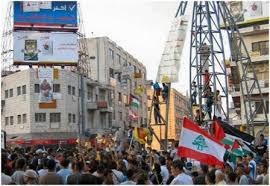
Waiting to enter Ramallah, at the Qualandiya checkpoint, told me that I was very much alive, and hoped to remain as such. War was all around me, at least the remains of a war that had taken a breather, giving me time to get in and to get back out. Yet, walking up to a soldier in full battlefield gear without being nervous is impossible. I found that the best approach was complete honesty.
When my turn came, I produced my passport with a picture that no longer looked so much like me and handed it to the soldier standing guard at the Qualandiya checkpoint. It looked official enough, I thought. I turned out to be right and entered without difficulty. I entered the city of Ramallah wondering if all the humiliation was needed. I finally concluded that is was.
I love the Jewish people, and I believe I let them know that. They are an amazing people with some of the greatest minds in history, to their credit. They have taken the desert and made it to blossom and is one of the few places in the world bananas grow in the desert. Still, what I would soon see inside Ramallah would have a big impact on me. There could be no accurate recounting of the situation without seeing the other side of the story. It would teach me how rich in culture and life both the Jews and the Palestinians are.
By the time Mr. Toubassi arrived, I was very happy to ride rather than walk in the embattled streets of Ramallah, with livefire all around us. Ramallah is by no means small nor insignificant. Before the founding of the State of Israel, the British had used this teaming city as a resort, during their rule, because of its moderate temperatures. Today, it is a teeming city, with sections which lay in complete ruins.
I started my journey at about 10:00 AM. I had found a good contact with the President of the Palestinian Journalists Syndicate, Mr. Naim Toubassi. He was not sure that I would make it through the checkpoint at Qualandiya, but if I could, he promised to meet me, when I arrived. I did not know Mr. Toubassi, but I had been assured that he was a reliable man, and it turned out to be completely true.
Journalism is a very dangerous profession for Palestinians, in the occupied territories. Mr. Toubassi, himself, has paid a price for his love of his people. He has spent as much as seventeen months in jail without charges for his role in reporting the incursions into the West Bank in three of his newspapers. Once he was released for one day and night and was rearrested the next day. He has preached peace and an end to the suicide bombings, but his pleas have fallen on deaf ears, due to the continued intransigence of the Israeli government, according to Mr. Toubassi. He pointed out that his credibility is threatened and he feared that the violence will only increase as his fellow Palestinians see no reason to push for a peace that they feel offers them nothing but the same.
Mr. Toubassi pointed out to me that fourteen Palestinian journalists had been killed and over 70 wounded by Israeli forces. In addition, nine journalists are still held in detention by Israel's military. Shimon Peres himself has stated that war does not mean only a rifle and a gun, but also a camera. We were given evidence of this statement when we visited the bombed out headquarters of the Palestinian Broadcasting Company.
During the massive incursion in Ramallah, the Israel army had systematically placed dynamite throughout the building and blew it up along with all the equipment, which had been purchased with American and United Nations' funds. It seemed a bit like killing a bug with a sledge hammer, but Israel's justification was that such media sources only encouraged and glorified the suicide attackers and their families as heroes of the Palestinian cause.
A Palestinian reporter asked me, "How do you feel about having your American tax dollars to fund such death and destruction." He was making reference to the two billion dollars in American funds sent to Israel for their defense. The same argument is used by Jewish citizens of Israel that the funds handed over to Arafat by the Clinton and Bush administrations after Oslo to build a security force have allegedly been used to purchase explosives for the attacks that have rocked Israel's civilian population.
As I sat down for lunch with Mr. Toubassi, I spoke little and listened a lot. His words were profound and pertinent. "Who is the power holder in this region? It is certainly not the Palestinians. It is Israel who has the soldiers, the tanks, the Apache helicopters and the bomb itself. What have we got? Our people have the guns the Israelis gave us after Oslo which are small. We have our rocks and our bodies. When a young boy here has lost his mother, father and his brothers and sisters, what does he have left to do? He feels he has no reason to live and he wishes to give back to his family's killers what they had given to him, so he blows himself up. America and Israel tells us to arrest our terrorists, but the jails are all destroyed so where will we put them? Give us our land and we will rebuild our security and the bombing will stop. Everyone knows, except America and Israel that peace under these terms is the only thing that will work. I promise you that then we will live side by side and have a mutually beneficial relationship. Until then, our calls for an end to the bombing will fall on deaf ears."
To say the least, this region is at the point of change, simply by virtue of the fact that no society can maintain such dire conditions indefinitely. Either the troubled area of the world will find a negotiating posture that both sides can agree to or violence will only increase and a complete obliteration of both sides will result. America has stepped up its role as an honest broker that appears to be trying to find a process which sees the causes and reasons for the violence on both sides.
The truth of the matter that I have been able to ascertain is that the despair and dire lack of hope of the Palestinians cries out on every street. It is not enough to state that this land belongs to Israel. Both groups of people are out of options. There are no resources or political contacts that have sufficiently revealed that the only solution truly is peace. Perhaps what type of peace and how to achieve it is still up for grabs, but there have not been enough serious exchanges that could ever hope to lead anywhere accept to more hatred, more bombing of innocent lives and more death on both sides. It seems clear that the time has come to call the bluff of the leaders of both sides and to see if it is peace or power that is truly desired by either side. Politics is by nature a self-serving affair. The only way to reveal the motives of the two enemies is by challenging both sides to sacrifice and make room for new leadership. The fact is that who ever becomes the next leader of the Palestinians will have to take the terrorist factions by their throats and crush them. Otherwise, any future leader will remain hostage to groups that cannot even fathom any future Palestinian state next to a State of Israel. Constitutions and political and judicial institutions will be of no effect and any leader will have no power to rule if they are not reigned in. It is only logical that if a new, democratic state can be achieved, the first threat to peace will be Hamas, Fatah, Islamic Jihad, Hezbollah, The Allah Aksa Martyrs Brigade and any of the various other splinter groups of which Hezbollah is armed to the teeth by Iran which exercises far wider influence in Middle-East violence than anyone cares to admit.
This became evident just over one year ago when the world was shocked by Hezbollah's ability to unceasingly lob their missiles into Israel. A future Palestinian leader will likely face a greater threat to regional peace from groups such as these which come from his own people than from Israel. Hamas has only lately made that clear. Indeed, it will be vital for a new Palestinian government to immediately develop strong relations with the State of Israel.
In fact, to accomplish what will be needed to establish a viable, legitimate Palestinian State, it will be vital that the terrorist groups be forced to turn on any newly elected government that was installed by the people of Palestine. This will break their public support. Money, guns and bombs cannot long live when the will of the people has been repudiated. A Hamas-led government would never outlaw terror, for it would be political suicide, since Terror is their raison D'etre.
If a new leader is willing to do the required tasks to rule, then it would not even be inconceivable to see Palestinian and Israeli troops fighting togetherto weed out the terrorist culture out of the Middle East. Such a situation would be mutually beneficial to both sides of the present conflict. Yet, it would be naive to expect such a direct demand by President Bush to be accepted at face value. It was clear to me that a large percent of Palestinians desire different leadership and peace and cooperation with Israel.
Never has the peacemaking role been so vital and never will there be another opportunity such as now. Hamas and Fatah are in a war of their own now. At the first bombing I witnessed in Israel, I spent a good deal of time taking it all in. I found it impossible to absorb entirely. A great feeling of guilt came over me and I did not want to take pictures, but their stories had to be told. When I was making my way out of the scene a long black bearded Jewish man came up to me. He had refused to cry, but his eyes were reddened. "We should have pushed them all out a long time ago. It is not that I hate Arabs or Palestinians, specifically, but Israel is for the Jew." The problem is that the day of Peres and the day of Prime Minister Sharon are over and there seems to be a leadership gap now in the Jewish state. The current leadership seems not to know that there will be no peace until they get rid of the killers? That is not so surprising since the world’s only super power has also missed the boat in that regard.
The Palestinian People and their Culture
A prayer for the State of Israel
Nobody can rightly say that Israel is unjustified in defending its citizens from the indiscriminate murder of its children and families. Christ said that anyone who harms a child would have a great millstone placed around their necks and be cast into the deepest sea. If this is the case, neither side will be able to escape judgment. Both are guilty of a lack of mercy and a sense of justice. Nevertheless, these two peoples are at war. It is a gang war of sorts and ground zero of the clash of personalities. What I saw and experienced in the home of the Intifada and in the middle of the Promised Land were these two peoples, both brothers, both with the same blood from the same father coursing through their veins and they are both deserving of a time of peace and hopeful of a future standing down and a cease to the hostilities. The world now waits to see if peace is truly desired or achievable in this sacred land.No one is sure of what President Obama truly desires to do in the Middle east today.He has been letting his goals disseminate piecemeal.What is sure is that in the future, once again stained with blood that runs in the veins of two peoples who are more alike than they would care to admit will again flow in the streets of the Holy Land, and it is understandable, they are brothers at war.
Steven Clark Bradley lived abroad for over 17 years and has been to 34 countries, including Pakistan, Iraq and Turkey. Hehas a master's degree in liberal studies from Indiana University. He speaks French and Turkish. He has been an assistant to a prosecutor, a university instructor and a freelance journalist in Ramallah, Palistine, Israel, Turkey, Iraq and Pakistan. Steven is the author of threenovels, Nimrod Rising, Probable Cause and Stillborn!


 n addition, family and friendship are priceless, precious, and sacred. The love Steven shared with his parents and siblings is a treasure that inspired him to be a better person. After living seventeen years abroad, restoring shattered relationships and learning what failure is, Steven Clark Bradley finds a new leap in faith. The author reminds us about respect for life itself, and that it's crucial that a great nation must care and show mercy to the less fortunate.
 Today, is America really better than those we destroyed, is freedom really free, and will our great nation continue to stand tall and brave? I highly recommend this book to all those who enjoy an autobiography that's filled with inspiration, honesty, and is educational. This endearing Memoir, penned by a Master storyteller will inspire as much as it will make you laugh, and cry. A remarkable, passionate story that will leave an aftermath generation-after-generation, from one author who makes a difference in this world!
 "There is nothing greater than writing & creating something from nothing. It's the closest thing to the divine! I have lived in many cultures and it has given me a love for the differences amongst us. I am a student of American culture and write about the changes in our society. Hope you read my books detailed in this blog." Visit my Website At: http://storiesthatreadyou.com/ Author Steven Clark Bradley